
Pulse Modulator Comparison
Power Pulse Modulators
Here you can compare the various attributes of our pulse width modulation circuits so that you can see which model will most suit your needs.
Model Variations
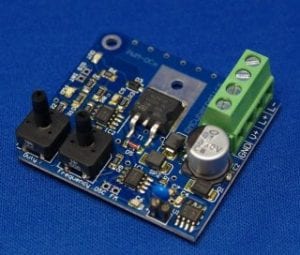
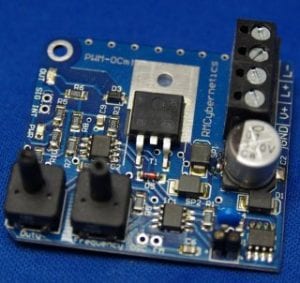
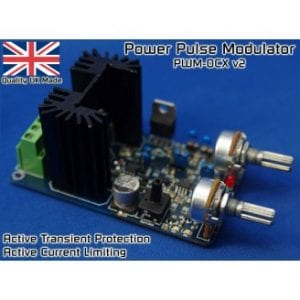
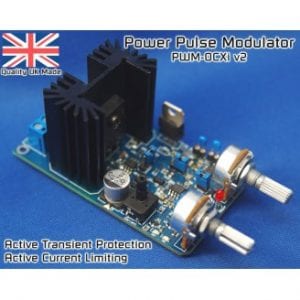
There are two main models of PWM available, these are the PWM-OCm and the PWM-OCX(v2). The OCm represents a miniature basic model, while the OCX v2 is an advanced model with many extra features and more power. There are currently two versions of each model. Ones with an “i” suffix (e.g. PWM-OCXi) are high voltage versions which use IGBT transistor technology, while ones without the suffix are low voltage MOSFET versions.
The two types of transistor technologies offer their own advantages and disadvantages. IGBT’s will tolerate much higher voltages and are therefore great for use with coils or transformers. MOSFET’s can pass higher currents and can be more efficient, this advantage comes at a tradeoff with the voltage tolerance and these are therefore best for non inductive loads such as lights or electrolysers.
|
Advanced protection
Advanced features |
Current vs Frequency
The graph below shows max average current that you should allow to flow at a given frequency. You can clearly see the superior power and frequency performance of the OCX v2 and OCXi v2 models.
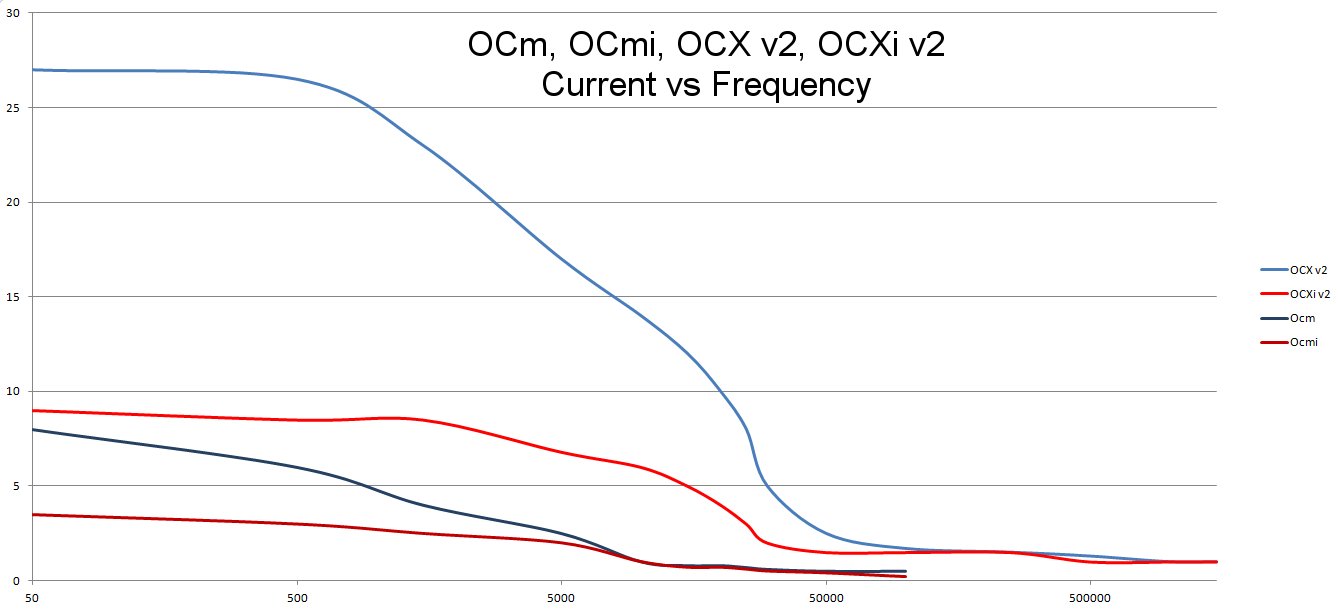
These values were obtained under the test conditions outlined in the product manuals. You should use this only as a guide as different conditions will alter the heat generated in the components.
The current ratings given are for when one or more components has reached around 100C and is no-longer increasing in temperature. When cold, it is ok to pass more current than shown in the graph, but only for a short time as the components will soon heat up.
PWM Features
| OCm | OCmi | OCX v2.1 | OCXi v2.1 | |
| Max Current | 8A | 3.5A | 24A | 9A |
| Max Voltage | 75V | 300V | 50V | 500V |
| Max Frequency | 100kHz | 100kHz | 1.5MHz | 1.5MHz |
| Passive Transient Voltage Protection | YES | YES | YES | YES |
| Active Transient Voltage Protection | NO | NO | YES | YES |
| Over Voltage and Over Current Indicator | NO | NO | YES | YES |
| Adjustable Over Current Protection | NO | NO | YES | YES |
| Monostable Pulse Mode | NO | NO | YES | YES |
| Invertable Output | NO | NO | YES | YES |
Custom Versions
 We can customise our circuits to meet your requirements if possible. Typical customisations might be to use a specific transistor of your choice, or to integrate it with some control hardware in an enclosure.
If you would like a unit customised, please use this custom PWM form.
Further Reading
We have a range of pages with photo’s and video of our PWM units in action. On these pages you can learn more about using them, and also what kinds of things they can be used for. Check the Product Guides page for more info