
Astrophysics & Space Phenomenon
Astrophysics & Space Phenomenon
 This section deals with the big stuff in physics, and when we say big we mean really big. Planet Earth is but a mere spec of dust in the massive and diverse realm of outer space. Considering that we all live on Earth, this section explains some of the fascinating phenomenon in space and how such things may affect our tiny planet.
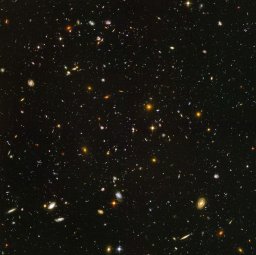
To get a feel for how massive the universe is, check out the deep field image from the Hubble telescope. This image not only shows the really distant, but the really old. Some of the galaxies are believed to be 800 million years old.
To take this picture, 800 exposures were taken during 400 orbits around Earth. The total exposure time adds up to 11.3 days. Click here for a full size image, or visit this site for an online zoomable version.
Photo credit: NASA/ESA/S. Beckwith(STScI) and The HUDF Team.
More recently the amazing JWST (James Webb Space Telescope has been capture new images in fascinating detail. Not only is the JWST much larger (6.5m vs 2.4m collecting surface), it also captures images un different wavelengths. The Hubble captures typically visible light while the JWST captures infrared images. The advantage of this is that the IR light can better penetrate clouds of dust and allow us to see deeper into the massive structures found in space.
The images below are real-time images from NASA and represent the latest data from SOHO. Press refresh in your browser to update the images.
|
SOHO LASCO C2
|
SOHO EIT 284
|
SOHO
|
Sunspots
|
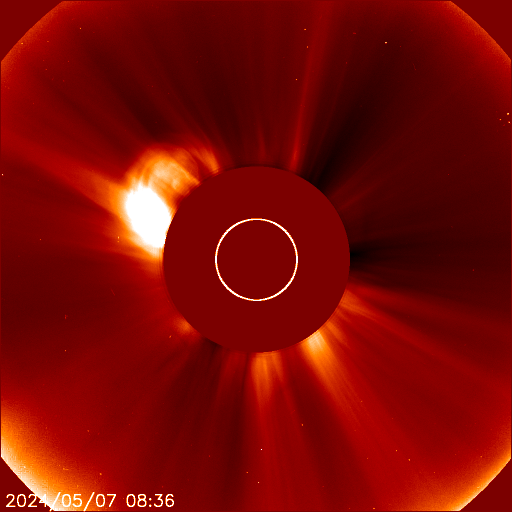
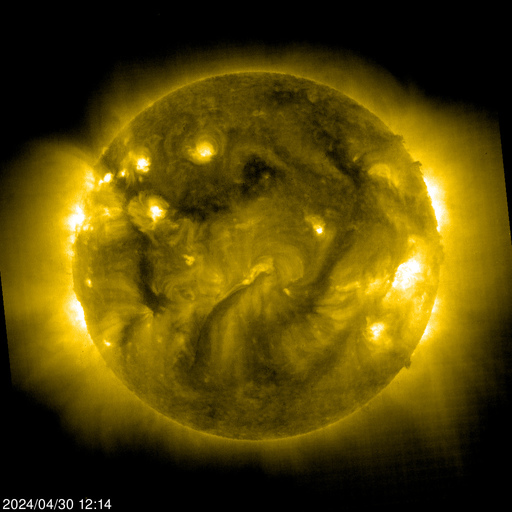
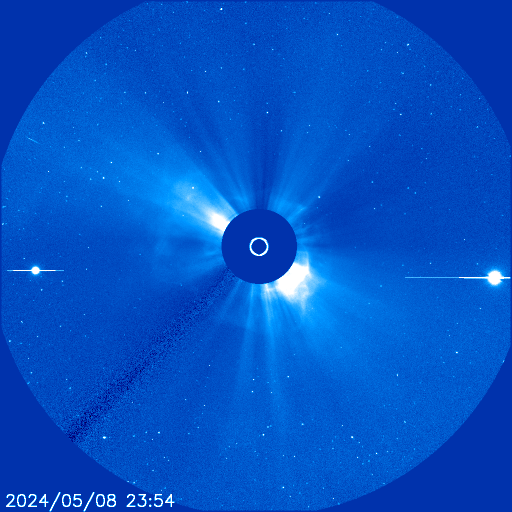

There’s a huge amount of data from space available online. The SWPC (Space Weather Prediction Center) has a range of information and forecasts including the shape size and location of the polar aurora.
The image below shows real time lightning strike data in Europe. Click the image to visit the LightningMaps.org website for more images and maps of other parts of the world.
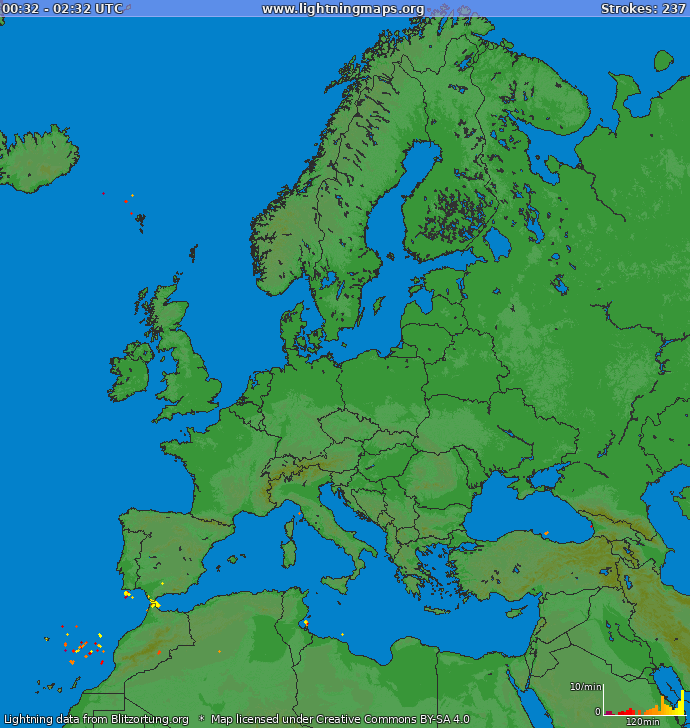
Real time map of lightning strikes in Europe
Click the image below to see the latest real time solar wind data.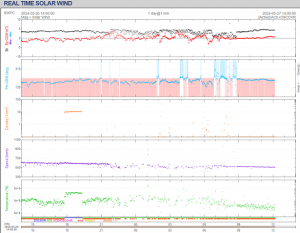
Next Page: Unexplained Phenomenon
Previous Page: Photon Violation Spectroscopy